Our Mission
In short, our mission is to make educational tools for everyone.
EduLinq is a 501(c)(3) nonprofit dedicated to creating free and open source software for education.
We believe that everyone deserves a good education regardless of wealth or status, and we want to help make that possible. We believe that educational software should be:
Free
Free software is available without charge to anyone that can download it. There should be no barriers on education, and wealth is perhaps the greatest barrier there is. Whether that barrier comes in the form of money, time, or privilege. As a software developer, we don't have the power to address all the issues that come with wealth inequality, but at least we can make our software free.
Open Source
Open source software has code that is always available to view and modify, anyone can see how the software works and improve upon it. Our dedication to open source software is that same as our dedication to transparency and always improving. It's impossible to foresee all the needs of people at one time, but because our software is available for all to improve, we can tackle changes as they come.
High Quality
High quality software is built robustly and with intention. On the user side quality software should accomplish its task without frustrating the user, and on the development side quality software should be maintainable. We take great care to always follow strong software engineering practices, the ACM Code of Ethics, and our own moral compass. We strive build software that is secure, maintainable, and robust.
Our Projects
Lynx Autograder
The Lynx Autograder allows instructors to create new or integrate existing grading infrastructure into a secure system that:
- accepts and tracks student submissions;
- runs students' code in a secure, isolated, and customizable environment;
- provides students feedback on their submissions;
- saves and backs up submission history;
- and uploads grades to a course management platform such as Canvas.
Quiz Composer
The Quiz Composer allows instructors to create platform-agnostic quizzes (including exams and worksheets) in a unified readable common layout and then quizzes can be instantiated in any number of formats automatically — quizzes can be generated in Canvas, HTML forms, LaTeX, PDFs, or GradeScope. The common format and tooling allows for frictionless collaboration when developing quizzes, simple deployment for both online and paper quizzes, and seamless handoffs between terms.
LMS Toolkit
The LMS Toolkit is a Python interface and site of CLI tools to interact with different Learning Management Systems (LMSs). LMSs are pivotal for running large courses, but have inconsistent graphical interfaces and typically are not designed for programmatic access. Once you learn one, moving between LMSs can be quite difficult. The LMS Toolkit provides users a unified, programmable interface to multiple LMSs. This allows instructors to easily move between LMSs, and support features that may not explicitly encoded into a special LMS's GUI.
Pacai
Pacai is an educational tool for AI in the guise of the Pac-Man game. Originally developed for UC Berkeley AI courses, we have rebuilt this project with from the ground up to improve performance, support, and accessibility. Notable improvements include:
- Upgraded to Python 3.10.
- Added Python type hints.
- Created a new web-based UI.
- Added isolation between agents and the core game engine to prevent cheating.
- Added the ability to save games as animated gifs.
Our Team
Eriq Augustine
Co-Founder

Eriq Augustine received his PhD in Computer Science in 2023, researching the scalability, expressively, and usability of relational machine learning models. He started his academic career at Cal Poly San, Luis Obispo where he got his BS and MS in Computer Science. He then spent several years in industry, working at Netflix on the Cloud Reliability team, at Google on Chrome's Extension Engine team, and as a Senior Software Developer at Gaine Solutions (a master data management / database startup). He finally decided to return to academia to get his PhD in CS/ML at UC Santa Cruz under Dr. Lise Getoor. However no matter where he was (academia or industry), one thing that always followed me was his love for teaching. He started tutoring off-and-on in middle school, turned it into a job in high school, became head tutor and ran his department's tutoring center at Cal Poly, became a lecturer for Cal Poly while working at Gaine Solutions, and am constantly involved in teaching, tutoring, mentoring, and creating curriculum at UCSC. Most of his life he has been involved with teaching. Now, he wants to combine his experience with teaching, academia, and industry to create software to help people teach.
Lise Getoor
Co-Founder
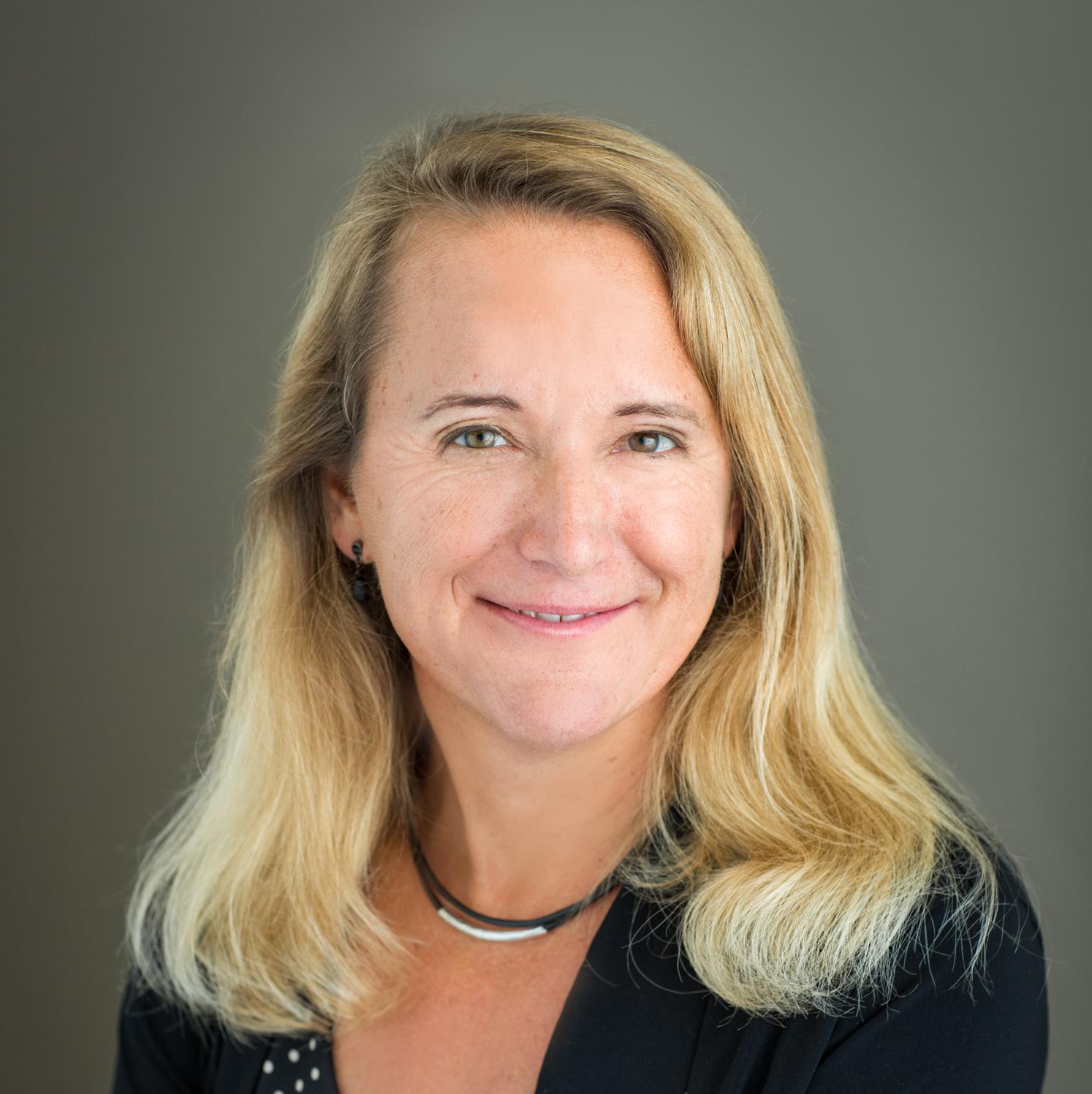
Lise Getoor is a distinguished professor in the Computer Science Department at UC Santa Cruz and holds a Baskin Endowed Chair. She has over 250 publications and extensive experience with machine learning and probabilistic modeling methods for graph and network data. She is a Fellow of the American Academy of Arts and Sciences, the American Association for Advancement of Science, Association for Advancement of Artificial Intelligence (AAAI), the Association for Computing Machinary (ACM) and the Institute of Electrical and Electronics Engineers (IEEE). She has been an elected board member of the International Machine Learning Society, served on the board of the Computing Research Association (CRA), has served as Machine Learning Journal Action Editor, Associate Editor for the ACM Transactions of Knowledge Discovery from Data, JAIR Associate Editor, and on the AAAI Council. She is a recipient of an NSF Career Award and thirteen best paper and best student paper awards. In 2014, she was recognized as one of the top ten emerging researchers leaders in data mining and data science based on citation and impact according to KDD Nuggets. She has served on the external advisory board the San Diego Super Computer Center, and the scientific advisory board for the Max Planck Institute for Software Systems, and has served on the advisory board for companies including Sentient Technologies.
Peter Alvaro
Board Member
Peter Alvaro is an Associate Professor of Computer Science at the University of California Santa Cruz, where he lead the Disorderly Labs research group. His research focuses on using data-centric languages and analysis techniques to build and reason about data-intensive distributed systems, in order to make them scalable, predictable and robust to the failures and nondeterminism endemic to large-scale distribution. He earned his PhD at UC Berkeley, where he studied with Joseph M. Hellerstein. He is a recipient of the NSF CAREER Award, the Facebook Research Award, the USENIX ATC 2020 Best Presentation Award, the SIGMOD 2021 Distinguished PC Award, and the UCSC Excellence in Teaching Award.
Alexander Dekhtyar
Board Member

Alex Dekhtyar is a Professor of Computer Science at Cal Poly, San Luis Obispo. He has a PhD in Computer Science from the University of Maryland. His research interests include machine learning, data science, database systems, requirements engineering, and cross-disciplinary research that requires applied machine learning, data science, or database technologies, as well as Computer Science and Data Science education. He is a co-founder of Cal Poly's Cross-Disciplinary Studies Minor in Data Science, and is one of the principal faculty members working on the BS in Data Science. He is also one of the co-founders or RE Cares - a Software Engineering + Social Good event co-located with the International Conference on Requirements Engineering. He is one of the faculty collaborator's on the Digital Democracy project.
Leilani Gilpin
Board Member
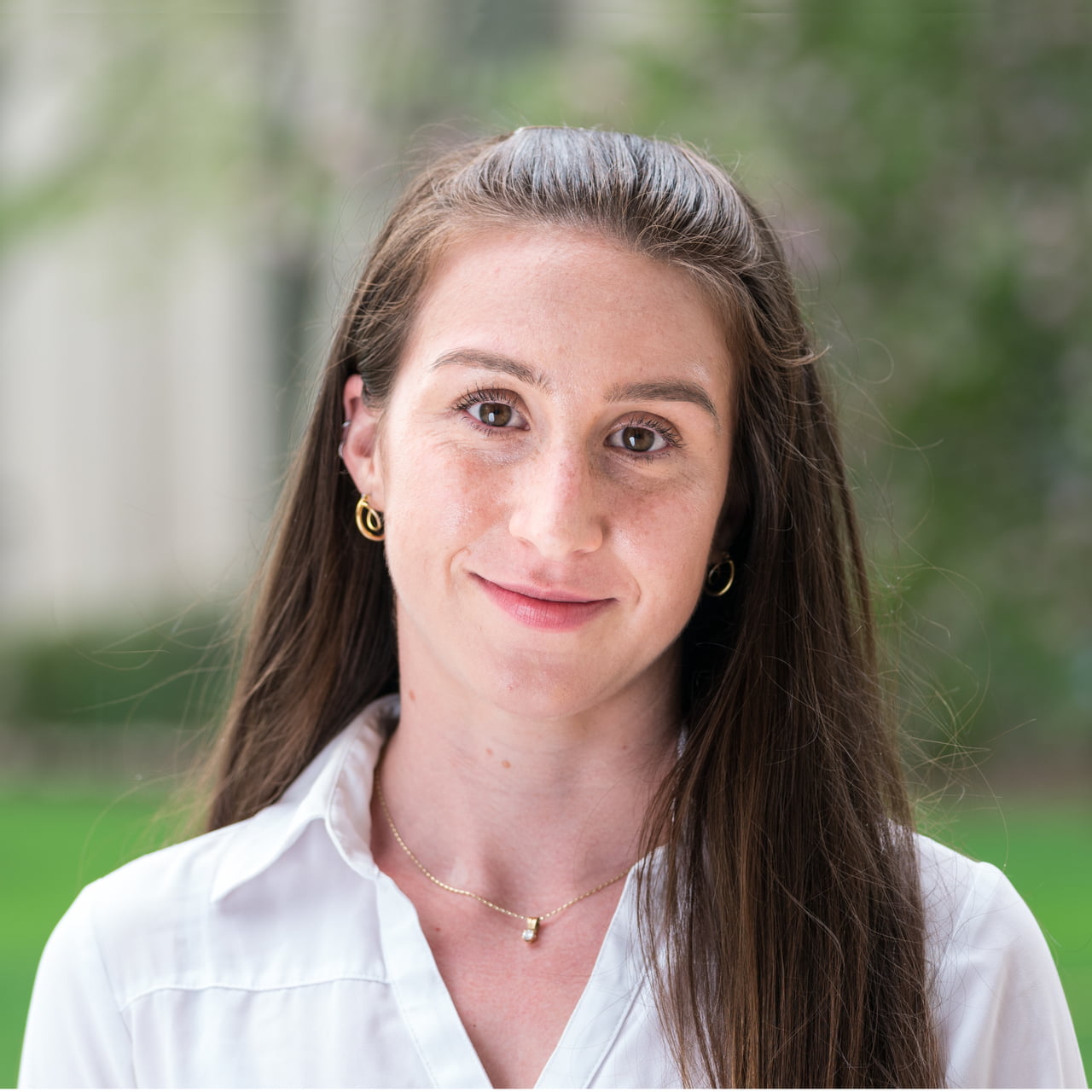
Leilani Gilpin is an Assistant Professor in the Department of Computer Science and Engineering at UC Santa Cruz. Her research focuses on the design and analysis of methods for autonomous systems to explain themselves. Her work has applications to robust decision-making, system debugging, and accountability. She holds a PhD in Computer Science from MIT, an M.S. in Computational and Mathematical Engineering from Stanford University, and a B.S. in Mathematics (with honors), B.S. in Computer Science (with highest honors), and a music minor from UC San Diego. Outside of research, she enjoys swimming, cooking, hiking, and org-mode.
Get Involved
Coders
Our software is open source, so there is always room for more developers. We have a wide range of software (frontend, backend, CLI, AI, etc.), so take your pick!
Designers
We have several products with web-based GUIs, and can always use more design advice. Whether it is logos, layouts, colors, or something else; a designer's touch is always welcome.
Technical Writers
Any great product is only as good as its documentation. Ranging over comments, READMEs, tutorials, and websites, there are plenty of places where a good writer can help out our users.
Instructors and TAs
If you have used our products in your own class or want to, then we would love to hear about it and answer your questions! Either way, come over to our Discord server to chat.
Anyone Who Believes
If you believe in our mission, thank you! If you have the means, we would very much appreciate any donation you can manage. We accept donations through GitHub Sponsorships or PayPal.